
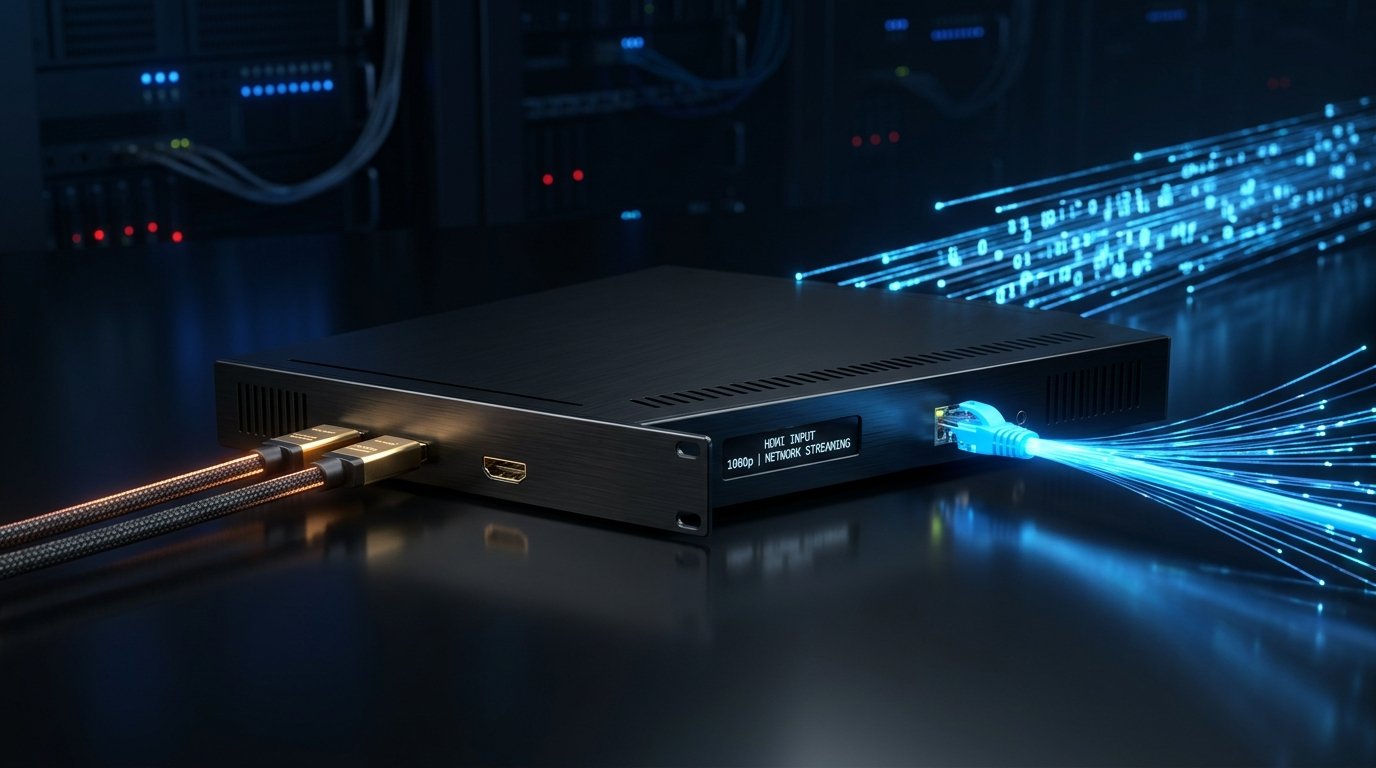
An iptv encoder is a dedicated hardware device or software program that converts raw, uncompressed video and audio signals (like HDMI or SDI) into a compressed digital format. It utilizes advanced mathematical algorithms, such as H.264 or HEVC, to drastically reduce file sizes without sacrificing high-definition visual quality. This compressed data is then packaged into IP streams and transmitted in real-time over the internet, bridging the gap between a live camera feed and the end viewer’s screen.
Table of Contents
Introduction: The Digital Broadcasting Revolution
Live video broadcasting has completely transformed the modern digital media landscape. From global television networks streaming live sports events to luxury hotels managing internal entertainment networks, the foundational technology driving these visual experiences remains exactly the same. We have rapidly moved past the era of massive analog coaxial cables, making Internet Protocol Television the undisputed, universal standard for modern media distribution.
However, transmitting high-definition video across global networks introduces a massive technical hurdle: data weight. Uncompressed, raw video requires an astronomical amount of bandwidth that would instantly crash any standard home or enterprise network connection. Solving this critical problem requires highly specialized, industrial-grade equipment designed to ingest, compress, and deliver visual data at lightning speed. Understanding and mastering this background technology is the first vital step to building a resilient, professional-grade streaming infrastructure that scales globally.
What is an iptv encoder?
At the absolute center of any modern streaming architecture, an iptv encoder acts as the universal translator between two technologically distinct worlds: the realm of raw baseband video and the realm of digital IP networks. Without this specific piece of equipment, broadcasting live video over the web would result in permanent buffering, massive data overloads, and a catastrophic degradation of the end-user viewing experience.
On a strictly hardware level, this device operates as a highly specialized, miniature ecosystem. It is built with ultra-fast Analog-to-Digital Converters (ADCs), dedicated System on a Chip (SoC) processors engineered solely for video manipulation, and optimized DDR RAM designed to handle real-time frame buffering. The physical unit also features Power Management ICs (PMICs) and electrostatic discharge protection circuits to guarantee continuous, uninterrupted operation around the clock.
The equipment executes its mission through three simultaneous, microsecond-fast phases:
- Signal Acquisition: It ingests heavy, raw video feeds directly from professional cameras, satellite receivers, or production computers via physical ports.
- Algorithmic Compression: The processor analyzes every single frame, discards visual data that is invisible to the human eye using complex mathematical models (codecs), and shrinks the file size exponentially.
- Network Encapsulation: The machine slices the newly compressed video into tiny IP data packets, wrapping them in specific transport protocols so they can travel effortlessly across Ethernet, Wi-Fi, or cellular networks to reach content delivery servers.
How an encoder for iptv functions within a broadcast ecosystem
Understanding the internal mechanics of an encoder for iptv requires examining the data journey frame by frame. The moment a live feed enters the machine, a sequence of digital transformations triggers instantly, long before the actual network transmission occurs.
The initial phase involves rigorous signal pre-processing. The hardware digitizes the incoming frames and executes a color space conversion, typically transforming standard RGB inputs into YCbCr formatting to optimize digital rendering. During this exact millisecond, the internal processor also handles dynamic scaling. It can take a native 4K camera feed and downscale it flawlessly to a crisp 1080p or 720p output depending on your network bandwidth limitations. If the source video originates from an older interlaced broadcasting system, the processor applies severe de-interlacing filters to prevent jagged, “comb-like” visual artifacts from appearing on modern progressive screens.
Once the image is purified and compressed, the critical network encapsulation phase takes over.
- Data Packaging: The compressed video frames are chopped into standardized 188-byte Transport Stream (TS) packets. The device injects Packetized Elementary Stream (PES) headers, specific stream IDs, and vital presentation timestamps to ensure the audio and video remain perfectly lip-synced.
- Protocol Routing: The hardware then pushes these packets out to the internet using targeted transport protocols. For local area distribution (like sending feeds across a university campus), it utilizes UDP Multicast. To broadcast globally to platforms like YouTube, Facebook, or dedicated CDN servers, it wraps the data in robust internet protocols like RTMP (Real-Time Messaging Protocol), HLS (HTTP Live Streaming), or the highly secure SRT (Secure Reliable Transport).
The critical role of an hdmi encoder for iptv in capturing raw video
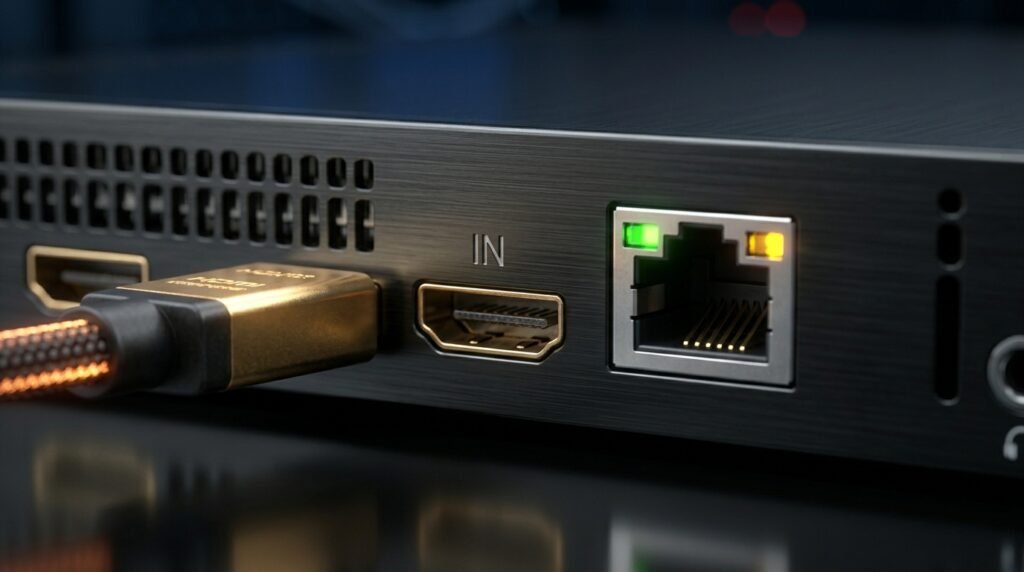
In contemporary professional and prosumer environments, the High-Definition Multimedia Interface (HDMI) has solidified itself as the undisputed gold standard for video transmission. An hdmi encoder for iptv is specifically engineered to extract the massive data payloads from these digital cables and adapt them perfectly for flexible, remote IP distribution.
These devices are equipped with specialized hardware receivers capable of decoding HDCP encryption protocols and extracting the native, uncompressed audio embedded within the video signal. The top-tier models on the market offer superior audio modularity by providing independent 3.5mm audio input jacks. This specific feature allows audiovisual technicians to bypass the camera’s internal microphone entirely, injecting crisp, studio-quality sound directly from an external digital audio mixer while controlling the gain directly through the encoder’s web interface.
The physical scalability of these units provides immense flexibility for system architects.
- High-Density Rackmounts: For complex television control rooms or hotel headends, enterprise-grade units can house up to 16 distinct HDMI inputs within a single server rack chassis, processing dozens of channels simultaneously.
- Dual-Stream Generation: A vital feature of modern units is their ability to generate two distinct IP streams from a single HDMI source. A church or school can push a pristine, high-bitrate 1080p main stream to large local projectors, while simultaneously transmitting a highly compressed 720p sub-stream to mobile viewers on social media.
Why you should choose an h 264 iptv encoder for network distribution
Selecting the correct compression codec is a strategic technical decision that dictates the reach, scale, and success of your entire streaming project. Deploying an h 264 iptv encoder remains the safest, most reliable, and universally adopted choice for nearly all global streaming architectures today.
While newer codecs certainly exist, the H.264 algorithm (formally known as MPEG-4 Part 10 or Advanced Video Coding) remains the absolute workhorse of the digital video industry. Its initial creation revolutionized live broadcasting by drastically lowering the bitrate required to transmit high-definition video over standard internet connections. It operates by utilizing complex inter-frame prediction, creating “I-frames” as full reference images, and only transmitting the pixels that change in subsequent “P-frames” and “B-frames.” This method maintains stunning visual integrity even on highly restricted, low-speed cellular networks.
Opting for H.264 solves the ultimate broadcasting challenge: universal hardware compatibility.
- Global Decoding Infrastructure: Virtually every single smartphone, tablet, laptop, smart television, and legacy set-top box manufactured in the last fifteen years features built-in hardware decoding specifically designed for H.264.
- Cost and Processing Balance: While the newer H.265 (HEVC) format offers vastly superior compression—cutting file sizes in half—it demands an immense amount of computational processing power. This drastically inflates the cost of broadcasting equipment and causes playback failures on older consumer devices. H.264 strikes the perfect, battle-tested balance between network efficiency, pristine image quality, and total audience accessibility.
Hardware vs. Software: Analyzing the different types of iptv encoders
The physical architecture of your streaming operation will systematically dictate the type of processing equipment you require. The industry is divided into two distinct, highly debated categories: dedicated hardware iptv encoders and software-based solutions running on general-purpose computers.
Software encoders, such as the open-source programs heavily favored by video game streamers, excel in creative flexibility. They allow producers to build complex visual scenes, add dynamic graphic overlays, and integrate hundreds of community-built plugins. They execute these tasks using the Central Processing Unit (CPU) or Graphics Processing Unit (GPU) of a standard personal computer. However, this flexibility introduces immense vulnerability. The computer must simultaneously manage heavy background operating system tasks, which significantly increases network latency and introduces the high risk of catastrophic software crashes during a live broadcast.
Conversely, hardware devices are engineered for absolute, industrial-grade reliability.
- Dedicated Processing: These standalone chassis are built using Application-Specific Integrated Circuits (ASICs). They exist for one sole purpose: encoding video. They do not suffer from unexpected Windows updates, background malware scans, or thermal CPU throttling.
- Unbreakable Uptime: They guarantee rock-solid stability for 24/7 continuous broadcasting while maintaining incredibly low latency, often pushing feeds in under 300 milliseconds. For high-stakes sports broadcasting, corporate television networks, or hospital monitoring systems, a hardware appliance is the only professionally viable option.
How premium hardware elevates your iptv service

The perceived value of your digital television platform relies entirely on the smoothness of the video rendering on your customer’s screen. Constant buffering wheels, sudden audio desynchronization, or heavy macro-blocking (pixelation caused by poor motion estimation from a cheap processor) will instantly destroy a broadcaster’s credibility. Investing in equipment with high-end internal electronics that accurately manages Constant Bitrate (CBR) and Variable Bitrate (VBR) controls is the ultimate insurance policy for a healthy network.
If you are looking to experience what a flawlessly optimized, hardware-backed broadcast infrastructure truly feels like, you need a provider that refuses to compromise on streaming technology. Step into the future of digital entertainment by joining our premium iptv service. We invite you to explore subscriptioniptv.us, the industry-leading platform offering unmatched channel stability, true high-definition resolution, and the absolute best service available for users looking to buy a reliable, top-tier subscription today.
Key Takeaways
Mastering the video encoding chain is a strict requirement for any modern digital broadcasting operation. The processing unit serves as the beating heart of your network, ingesting heavy raw video through HDMI or SDI ports, purifying the color space, and aggressively compressing the data using advanced algorithms like H.264. By prioritizing dedicated hardware appliances over unstable software alternatives, broadcasters guarantee minimal latency, universal device compatibility, and the rock-solid reliability required to meet the high expectations of today’s digital consumers.
Frequently Asked Questions (FAQ)
What is the IPTV video encoder?
An IPTV video encoder is a specialized electronic device or software program that converts raw, bulky analog or digital video signals into highly compressed data formats. It packages these compressed files into optimized IP packets, allowing seamless, buffer-free transmission over the internet to smart TVs, mobile phones, and web browsers.
What encoder is best for streaming?
The best choice depends entirely on your production environment. Dedicated hardware encoders are superior for 24/7 enterprise broadcasting, churches, and hotels due to their flawless stability and ultra-low latency. Software encoders are better suited for individual web content creators who require high visual customization, graphic overlays, and scene transitions.
How to use an encoder for live streaming?
To begin broadcasting, physically connect your raw video source (like a camera) to the hardware encoder’s HDMI input port. Access the device’s administrative dashboard via your web browser to configure your desired output resolution, bitrate, and codec. Finally, input the specific RTMP URL and stream key provided by your destination platform.
Is H.264 an encoder?
No, H.264 is neither a physical machine nor a software application; it is an algorithmic video compression standard, commonly known as a codec. A physical encoder (the hardware) utilizes the H.264 mathematical algorithm to systematically reduce the file size of the raw video while preserving excellent visual image quality.
Which encoder is better, H264 or H265?
H.265 (HEVC) is technologically superior in data efficiency, offering the exact same visual quality as its predecessor while consuming half the network bandwidth. However, H.264 remains the best and most reliable option on the market today because it guarantees absolute universal hardware compatibility with older smart TVs, legacy set-top boxes, and all major platforms.